Call for papers: ‘Food in Prison. International and Multidisciplinary Perspectives’ Brussels 21-22 Sept 2018

VUBCarceral geographers and others working on the embodiment of confinement may wish to contribute to an upcoming seminar:

The Research Groups ‘Crime & Society’ (CRiS) and ‘Social and Cultural Food Studies’ (FOST) of the Vrije Universiteit Brussel, extend an invitation to the international seminar ‘Food in Prison. International and Multidisciplinary Perspectives’, which will take place in Brussels (Belgium) on the 21-22 September.

The goal of this seminar is not only to offer an overview of studies on prison food, but to stimulate scientific discussion over the different disciplines on specific prison food related topics, such as self-catering systems, hunger strikes, gender issues, etc.

Read the full call for papers here.

Central themes of discussion include: 

  • prison food practices in different jurisdictions
  • the meanings of food for prisoners
  • food as part of the (disciplinary) regime
  • hunger strikes in prison
  • food as means for protest/ resistance
  • prison food and identity construction
  • prison food practices and gender
  • prison diets

Abstracts on prison food are invited – send by mail to: Esther.Jehaes@vub.be. Deadline: June, 15th. Total word count: 400- 500 words. Notification of acceptance: June, 30th).

The finalized and peer reviewed articles will be published in a special issue of an international peer reviewed journal.

The following key note speakers will be present: Linda Kjaer Minke (Associate Professor, University of Southern Denmark), (to be confirmed:) Amy Smoyer (Assistant Professor, Southern Connecticut State University, U.S.), An-Sofie Vanhouche (PhD, Vrije Universiteit Brussel, Belgium) and Helen Sandwell (nutritionist, Food Matters Inside & Out, U.K.).

For any inquiries regarding the program, please contact:  An-Sofie.Vanhouche@vub.ac.be.

CFP: contributions to an edited collection on media, incarceration, prisons

Marcus Harmes at the University of South Queensland is issuing a call for papers for a proposed edited collection on media, incarceration, prisons

Prisons, prisoners, and crime are attracting unprecedented levels of interest from both predictable sources (tabloid media) to more unexpected (such as the prison setting of Paddington 2).

Globally, but especially in the United Kingdom, the United States and Australia, the real life prison population is rising dramatically. The fictional presentations of prison, which may be prurient and sexploitative, high minded or fantastical, is matched by the barely factual and highly sensationalized prison of reality television. Orange is the New Black is only the latest example of the compulsion media of all types have to look inside the prison.

This proposed book focuses on the (real or imagined) spaces of the prison and prisoners and the stories told about prisons and justice in media both fictional and non-fictional media, and perhaps more importantly, in the uncertain space between both. Reality television, tabloid media, crime and horror films, soap opera and pornography and gaming are all possible areas of focus.

Possible themes, areas and productions include (but are not limited to)

  • Fantasy and comedy incarceration (eg The Prisoner and The Avengers, Porridge, Get Smart, The Simpsons and Hogan’s Heroes)
  • Wrongful imprisonment and escape from prison
  • The women in prison genre (eg Yield to the Night, Turn the Key Softly)
  • Sexploitation and naziploitation
  • Reality television of the ‘world’s toughest jails’
  • Celebrity prisoners (eg Chopper Read, Conrad Black)
  • The prison soap (eg Bad Girls, Cell Block H)
  • Running prisons (eg The Governor, Within these Walls)
  • The prison of the future in science fiction or of the past in historical drama
  • Dark tourism
  • Selling private prisons: prison promotional texts and media
  • The prison camp (eg Tenko, Colditz)
  • Scientific experimentation in prisons (eg A Clockwork Orange, Tales from the Hood, The Vanishing Man)

Timelines

Please send chapter abstracts of 300 words by June 15th 2018. The abstract should indicate the focus of the contribution, the approach/method the author/s is taking to the research question and tentatively the conclusions the chapter will be making.

Abstracts which would provide the basis of chapters of 3000-6000 words, needed by the end of 2018.

At present no contract is signed but there is positive interest from a major international publisher for a full proposal.

Questions can be directed to marcus.harmes@usq.edu.au

Guest passes for the RGS-IBG conference 2018

RGS.M blackThe Carceral Geography Working Group of the RGS-IBG has a small number of complimentary guest registration passes (for up to the entire duration of the RGS-IBG conference) to offer to potential conference delegates who would not normally attend the conference without complimentary registration. These complimentary registrations are provided by the RGS-IBG to encourage participation in the Annual International Conference from non-geographers based in the UK, and from either geographers or non-geographers overseas who may have difficulties in paying their registration fee. Usual registration costs start at £100 (details here). The conference will pay for registration fees only. Guests are responsible for paying for travel, accommodation and all other costs of attending the conference. There are further details about the guest scheme here.
The RGS-IBG conference takes place in Cardiff, UK on 28-31 August 2018. The CGWG will be well represented, with three sponsored sessions (Geographies of Institutionalised Childhood, Camps, Control and Crime: Critical geographies of security and refugee encampment; and Care as Incarceration: The Changing Landscapes of Institutional Treatment of Disabled People) as well as the AGM of the Working Group itself. (The conference programme is to be announced imminently here: RGS-IBG conference)

If you would like to express interest in receiving one of these complimentary passes, then please carefully review the Research Group Guest criteria to check your eligibility. (The three key criteria are that nominated guests: (1) must be making a substantive contribution to the conference programme, e.g. presenting a conference paper, acting as session panellist or discussant, or convening a conference session; (2) are expected to also be active participants in the conference, attending sessions beyond the one in which they are directly involved, and that (3) if a nominated guest is from the UK, they must not be a geographer or a member of a university geography department).

If you fit these, and the other, criteria, please send a statement of motivation (max 100 words), to d.moran@bham.ac.uk by 16 May 2018.

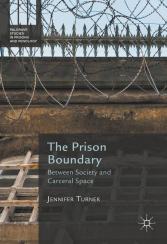
New ‘Carceral Crossings’ piece on Jennifer Turner’s ‘The Prison Boundary’ by an incarcerated student

The Carceral Geography Working Group of the RGS is delighted to present the second inprison-boundary its series of Carceral Crossings, a series of short essays, intended to showcase both new scholarship in this field, and to provide an opportunity for Early Career Researchers (undergraduate, masters, doctoral, and postdoctoral) to bring their own research to the attention of the wider community.

The second such essay comes from an anonymised incarcerated student, who is an MPhil Candidate in the JETA (Justice and Equity Through Art) Program, at the School of Design and Art, at Curtin University, in Western Australia, whilst at the same time serving a prison sentence. He considers Jennifer Turner’s monograph ‘The Prison Boundary’ and reflects on his own artistic process.

He writes “…challenging the Gothic facade of the modern prison as concrete and solid, I explore the concept of the contemporaneous carceral boundary built of mesh and razor wire being a sieve that filters and restricts in a more metaphorical way”. He draws upon Jennifer Turner’s consideration of the porosity of the prison boundary.

Read the full essay here, and if you would like to write a Carceral Crossings piece yourself, fill out the form available on this page.

In-Our-Backyards-Symposium 25-26 Oct 2018 in New York – Call for Papers from The Vera Institute

Image resultThe Vera Institute of Justice will host a research symposium on incarceration on Thursday and Friday October 25 and 26, 2018 in New York, US.

The call for papers is available now. Submissions are due May 8, 2018.

All documents associated with the call for papers can be downloaded by using the links at the bottom of this page, or as a zipfile here.

Image: Huerfano County Correctional Facility, built in 1997 and operated as a private prison by Corrections Corporation of America. Closed in 2010.

Photo credit: Jack Norton. Huerfano County Correctional Facility, built in 1997 and operated as a private prison by Corrections Corporation of America. Closed in 2010. (From https://vera-institute.github.io/In-Our-Backyards-Symposium/)

The unprecedented scale of incarceration in the United States has many political, economic, and social effects. The research symposium explores changes in the carceral landscape and their impacts on American society. Submissions are invited from advanced graduate students, faculty, independent or policy researchers. The organisers expect that a number of papers responsive to this call will provide new insights on the burden of high rates of incarceration, the health, social, and economic consequences for individuals and communities, and insight into emerging policy issues and problems. Papers are asked to engage with the data that is available, but not all papers need to be quantitative or empirical in nature. Submissions from across the social sciences and humanities, economics and data science are welcome.

Submissions should include an abstract of 150-500 words and a brief biographical statement and CV. Please submit all materials by May 8, 2018.

For more information about the In Our Backyards project visit: https://www.vera.org/projects/in-our-backyards


New CGWG book review – Cheryl McGeachan reviews ‘Carceral Spatiality’

Image result

The latest in the Carceral Geography Working Group’s Book Review series has just been published. Cheryl McGeachen of the University of Glasgow reviews Carceral Spatiality: Dialogues between Geography and Criminology, edited by Dominique Moran and Anna K Schliehe, and published in 2017 by Palgrave Macmillan as one of their Palgrave Studies in Prisons and Penology.

Carceral Spatiality originated in a 2014 session at the RGS-IBG Annual Conference in London, addressing the conference theme of co-production. It developed to include chapters (from Lorraine ven Blerk; Caitlin Gormley; Anna Schliehe; David Scheer and Colin Lorne; Jennifer Turner; Rebecca Foster; Clemens Bernhardt, Bettina van Hoven and Paulus Huigen; Sarah Armstrong and Andrew Jefferson), many of which started to take shape in conversations initiated at the conference itself.

Cheryl McGeachan finds that the collection ‘showcases a range of critical conversations across geographical and criminological work that seek to simultaneously open up and break down ‘the carceral’ in innovative, challenging and, at times, controversial ways.’

Read her review in full here.


New CGWG book review – Carrie Crockett on Sarah Badcock’s ‘A Prison Without Walls’

Cover for 

A Prison Without Walls?

The latest in the Carceral Geography Working Group book review series is now online. Following hot on the heels of ACE Collective’s review of Cormac Behan’s Citizen Convicts, and demonstrating the sheer diversity of interests within carceral geography, Carrie Crockett provides a review of Sarah Badcock’s A Prison Without Walls? Eastern Siberian Exile in the Last Years of Tsarism.

Read her review here.

To suggest a book to be reviewed for the CGWG series, email d.moran@bham.ac.uk

New book available for review: ‘Stick Together and Come Back Home: Racial Sorting and the Spillover of Carceral Identity’ by Patrick Lopez-Aguado

Image result for stick together and come back homeThe Carceral Geography Working Group invites prospective reviewers for its Book Review series, for Stick Together and Come Back Home: Racial Sorting and the Spillover of Carceral Identityby Patrick Lopez-Aguado, published in Jan 2018 by University of California Press.

In Stick Together and Come Back Home, Patrick Lopez-Aguado (Assistant Professor of Sociology at Santa Clara University) examines how what happens inside a prison affects what happens outside of it. Following the experiences of seventy youth and adults as they navigate juvenile justice and penal facilities before finally going back home, he outlines how institutional authorities structure a “carceral social order” that racially and geographically divides criminalized populations into gang-associated affiliations. These affiliations come to shape one’s exposure to both violence and criminal labeling, and as they spill over the institutional walls they establish how these unfold in high-incarceration neighbourhoods as well, revealing the insidious set of consequences that mass incarceration holds for poor communities of colour.

Prospective reviewers are invited to email d.moran@bham.ac.uk to organise delivery of a complimentary copy of the book.

Reviews should be c1000 words in length, delivered within 2 months of receipt of the book, and should specifically consider the work in relation to carceral geography and geographical conceptualisations of confinement. Reviews will be published on the www.carceralgeography.com website.


“Incarceration, Migration and Indigenous Sovereignty: Thoughts on Existence and Resistance in Racist Times” free to download now

The education booklet Incarceration, Migration and Indigenous Sovereignty: Thoughts on Existence and Resistance in Racist Times has recently been published online.

This booklet responds to the current and ongoing histories of the incarceration of Indigenous peoples, migrants, and communities of colour. One of its key aims is to think about how prisons and their institutional operations are not marginal to everyday spaces, social relations, and politics. Rather the complex set of practices around policing, detaining, and building and maintaining prisons and detention centres are intimately connected to the way we understand space and place, how we understand ourselves and our families in relation to categories of criminal or innocent, and whether we feel secure or at home in the country we reside.

Incarceration, Migration and Indigenous Sovereignty features contributions first presented at Space, Race, Bodies II: Sovereignty and Migration in a Carceral Age. Contributors include: Teanau Tuiono, Fadak Alfayadh, Emmy Rākete, Crystal McKinnon, Emma Russell, Marie Laufiso, Suzanne Menzies-Culling, R. Michelle Schaaf and Holly Randell-Moon.

The booklet is available for free download here​

The Space, Race, Bodies research collective has limited funding available for print copies of the booklet. If your organisation would like copies, please email: space.race.bodies@otago.ac.nz


Call for views on ‘Management of Offenders Bill’ from the Scottish Government

Carceral geographers working on notions of the porosity of the prison boundary, embodiment, (im)mobility, and issues of extended surveillance and control beyond the prison (especially re electronic tagging and/or disclosure), may be interested to offer views to the Scottish Government.

Prior to considering the Scottish Government’s ‘Management of Offenders Bill’, the Justice Committee is launching a call for evidence.

According to the call: ‘The Bill seeks to enable greater use of electronic tagging, reduces the time before a conviction is ‘spent’ for the purposes of disclosure, and alters the makeup of Parole Boards. The changes proposed to tagging could lead to offenders wearing tags fitted with more advanced GPS location technology. Ministers also foresee a point where tags could be used to detect alcohol or drugs in an offender’s system. The Bill would enable these and other measures in future. Elsewhere, the Bill reforms the law on disclosing past offences to others, such as potential employers. The overall direction of travel is towards reducing the requirement to disclose by lowering the time limits before convictions become “spent”. For example the disclosure period for a prison sentence of between 1 and 2 years falls from 10 to 3 years. So-called “higher level” disclosure, affecting sensitive areas of employment, is not affected by the Bill. The Scottish Government’s stated aims are to have more focus on crime prevention, rehabilitation, and support for victims.’

The call for views is open until Friday 20 April. Further details are available here.