 3rd International Conference for Carceral Geography, University of Liverpool, UK
17-18th December 2018
counterpoints and counter-intuition
Following the success of the 1st and 2nd International Conferences for Carceral Geography held at the University of Birmingham, the Carceral Geography Working Group (CGWG) of the Royal Geographical Society (with the Institute of British Geographers) will organise the 3rd International Conference for Carceral Geography at the University of Liverpool.
The 3rd International Conference for Carceral Geography provides an opportunity for presentation and discussion of work on all forms of carcerality; camps, confinement, custody, detention and incarceration, from carceral geographers, and scholars, scholar-activists and practitioners from all disciplines. Contributions from Early Career Researchers are especially welcomed.
The conference theme of “counterpoints and counter-intuition” is intended encourage both a diversity of perspectives on the carceral, and to stimulate discussion of that which is or was unanticipated, had been unimagined, or was unforeseen.
‘Counterpoint’ is a term used in musical theory to describe the relationship between voices that are simultaneously independent yet interdependent. We deploy this term here to describe the differing perspectives which characterise carceral research – including scholar-activism aligned to abolitionism or reductionism, and research conducted within and with the formal approval of, carceral establishments. We see all of these voices as purposeful and productive, and through this theme we seek to highlight both their independence, and the interdependences between them. All perspectives are welcome, and the theme of ‘carceral counterpoint’ encourages constructive and collaborative dialogue across the diversity of perspectives.
Through the theme of ‘carceral counter-intuition’ we seek to explore the unexpectedness of carcerality, its unimagined forms and its unforeseen aspects – and simultaneously to interrogate their apparently counter-intuitive nature. Carceral geographers and others have noted that the carceral exists in unexpected places beyond the formal contours of detention or prison; carceral scholarship is increasingly identifying previously under-recognised aspects and consequences of confinement, and innovative methodologies are uncovering under-researched elements of carceral experience. And beyond the ‘academy’, 2018 has itself brought the ‘unanticipated’. An unexpected heatwave in Europe has caused deterioration in prison conditions – yet climate change research tells such that such extreme weather events are increasingly likely. And the US has seen the unthinkable – the separation of migrant families at the border and the incarceration of migrant children – in a move depicted by the Trump administration as an inevitable consequence of the enforcement of a ‘zero tolerance’ immigration policy.
This CFP is intentionally broad, reflecting the diversity and expansive nature of carceral geography. All contributions are welcome, but in this 3rd International Conference we particularly invite papers which speak to the carceral counterpoint and counter-intuitive – in other words, which draw attention to the unexpected, unanticipated and/or unimagined aspects of carcerality, and which critique their counter-intuitive character.
Please send abstracts of 250 words by a closing date of 1 October 2018. Successful contributors will be notified by 31st October.
Conference registration will be free. Catering for both days will be available at the cost charge of £27 to include lunch and all refreshment breaks. An optional conference dinner will also be available.
There will be a limited number of travel and accommodation bursaries available for paper presenters. These will be limited to £50 for speakers travelling from the UK outside of London; £100 for speakers travelling from London, and £200 for speakers travelling from outside the UK. Accommodation bursaries will be limited to £50. Priority for bursaries will be given to CGWG members who are also RGS Fellows and to speakers who have not previously received financial support to attend the annual conference.
Abstract submissions should be submitted using the Abstract_submission_form (which asks for information about any travel and accommodation bursaries required) and emailed to jennifer.turner@liverpool.ac.uk by 1st October 2018.
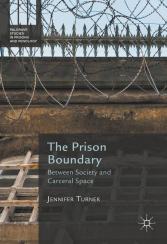
 Prisons are typically highly-controlled spaces, in which landscape elements (buildings, fences etc.) are carefully planned to maintain a secure perimeter and clear sightlines, and to minimise opportunities for prisoners to scale vertical structures, or conceal contraband. They are also environments whose cost, both capital-build and facilities-management, is under constant scrutiny. Further, they are environments about which very strong opinions are held about what is ‘appropriate’ – public opinion, as reported in a vigilant media, complains that prisons resemble ‘holiday camps’ and are ‘too soft’, instead demanding ‘no-frills’ accommodation. However, contemporary prison reform discourse emphasises normalisation, and suggests that therapeutic environments can support enhanced rehabilitation and possibly desistance from reoffending.
 Carceral geographers and others working on the embodiment of confinement may wish to contribute to an upcoming seminar:
 The Carceral Geography Working Group of the RGS-IBG has a small number of complimentary guest registration passes (for up to the entire duration of the RGS-IBG conference) to offer to potential conference delegates who would not normally attend the conference without complimentary registration. These complimentary registrations are provided by the RGS-IBG to encourage participation in the Annual International Conference from non-geographers based in the UK, and from either geographers or non-geographers overseas who may have difficulties in paying their registration fee. Usual registration costs start at £100 (details
  its series of
  The
The 
 The C
The C Prof Dominique Moran
You must be logged in to post a comment.