New book: “Carceral Spaces: Mobility and Agency in Imprisonment and Migrant Detention”

‘Carceral Spaces: Mobility and Agency in Imprisonment and Migrant Detention‘ (Ashgate, 2013) edited by Dominique Moran, Nick Gill and Deirdre Conlon.moran_gen 55 cover.QXD_mobility and agency

This book draws together the work of a new community of scholars with a growing interest in carceral geography: the geographical study of practices of imprisonment and detention. It combines work by geographers in ‘mainstream’ penal establishments that incarcerate people convicted of a crime by the prevailing legal system, with geographers’ recent work on migrant detention centres, in which refused asylum seekers, irregular migrants and some others are detained, ostensibly pending decisions on admittance or repatriation. In each of these contexts, contributions investigate the geographical location and spatialities of institutions, the nature of spaces of incarceration and detention and experiences inside them, governmentality and prisoner agency, cultural geographies of penal spaces, and mobility in the carceral context. In dialogue with emergent and topical agendas in geography around mobility, space and agency, and in relation to international policy challenges such as the (dis)functionality of imprisonment, and the search for alternatives to detention, the book draws upon and speaks back to geography, criminology and prison sociology.

The book presents original empirical research from the USA, Colombia, Russia, France, the UK, Ireland and Romania, bringing together papers initially presented for themed sessions organised at the Annual Conference of the AAG in Washington, DC, USA and the Annual Conference of the RGS-IBG in London, UK, both in 2010. Apart from the editors, contributors include Lauren L Martin, Matt Mitchelson, Olivier MilhaudBénédicte Michalon, Julie De Dardel, Jennifer Turner, Nancy Hiemstra and Mason McWatters, with reflective pieces from Alison Mountz and Yvonne Jewkes.  The broad conceptual focus and wide geographic net is consistent with the goals of sparking insight, dialogue and new connections across ordinarily distinct areas.

This book was published last month and launched at the 2013 Annual Conference of the Association of American Geographers, in a roundtable session featuring editors and contributors. It’s available for purchase via Ashgate and Amazon.

Reviews: 

‘From Nick Gill’s eye-opening discussion of the relationship between freedom and mobility, to Deirdre Conlon’s fascinating Foucauldian analysis of the hunger strike, this book offers analyses that are empirically strong and theoretically innovative. From a criminological perspective, the book manages chapter by chapter to break new ground even in a familiar territory. You should read it.’
Thomas Ugelvik, University of Oslo, Norway

‘Engaging, thought-provoking and insightful, Carceral Spaces shines a much-needed light on contemporary practices of incarceration and detention. Required reading for anyone interested in confinement and the control of ‘problematic’ populations in a globalised world.’
Alexandra Hall, University of York, UK and author of Borderwatch: Cultures of Immigration, Detention and Control

‘Prisons and immigration detention facilities ostensibly draw sharp divisions between who is inside and who is outside, who is good and who is bad, who is included and who is excluded from society. Contributors to this important volume undermine these dualisms with rich empirical evidence and strong theoretical elaboration that advance the burgeoning field of carceral geography, and offer fresh perspectives to migration studies and criminologists’ study of “punishment and society”. Carceral Spaces gathers original research on prison regimes and immigration detention estates from an impressive array of sites. This comparative dimension illustrates the international unevenness of spatial practices of confinement. Despite their differences, all carceral regimes create and rely on carceral spaces and carceral mobilities. Indeed, close attention to the relationship between the state’s power to confine and to forcibly move people is the book’s greatest strength. Together, they challenge the idea that prison cells fully extinguish political agency and that mobility necessarily means total freedom. Instead, careful documentation and nuanced theorization of this relationship offers scholars and activists new understandings of state power. This knowledge hopefully can enable people who are confined and their allies to end carceral regimes and the harms they create’. 
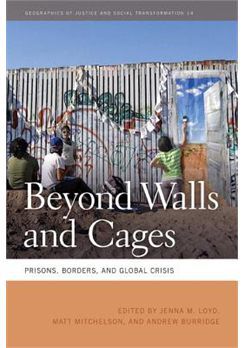
Jenna Loyd, co-editor of Beyond Walls and Cages
Stopping them ‘upping sticks and moving somewhere else’ – restrictions on UK released prisoners’ mobility

Speaking after a recent Commons evidence hearing, UK Justice Secretary Chris Grayling stated his intention to ban released prisoners from moving around the country when they leave jail to ensure they complete their rehabilitation programmes. As reported in The Guardian today, the justice secretary said tougher conditions would be imposed on released prisoners from short sentences so that they could not “move 200 miles up the road for no reason”.

The move was justified by Grayling by describing the current situation as “quite chaotic”, and implying that newly released prisoners’ mobility around the country fuels high reoffending rates. “I do not think that anybody who has come out of prison and is subject to a supervision arrangement should be free to up sticks and move somewhere else”.

Grayling’s words and his intention to restict the movement of released prisoners extend the debate over prisoner mobility and the reach of the carceral system beyond the prison walls. The theme of mobility and punishment has been prevalent within carceral geography for some time, with Nick Gill’s 2009 paper on governmental mobility and the UK asylum estate, and Dominique Moran, Laura Piacentini and Judith Pallot’s 2012 paper on disciplined, or forced mobility, in the Russian prison system.  These papers draw attention to the theorisation of mobility and power, and specifically, the consideration of mobility as an expression of power, in that the forced mobility of detained migrants and prisoners shapes the experience of confinement on the part of these groups. In a forthcoming book chapter focusing on electronic monitoring systems used to track former inmates and detainees beyond the spaces of prison, Gill further discusses mobilities operating as ‘vehicle’ to alternatively deny or deliver punishment vis-à-vis  liberty.

The suggestion by Grayling that prisoners’ mobility be restricted after release in order that they complete rehabilitation programmes echoes these arguments. On the one hand, the extension of spatial fixity beyond the prison wall suggests that the prisoner’s own home and community becomes something of a ‘transcarceral’ space of reconfinement, in which the regime of the prison takes form through a respatialised notion of the carceral. On the other, the apparently essential link between this transcarceral spatial fixity and the ‘betterment’ of rehabilitation sees spatial and social mobility in conflict one with the other. In order to realise the benefits of rehabilitation, in terms of reduced reoffending and improved social mobility, the prisoner must sacrifice physical mobility and the self-determination of location afforded to free citizens.

Although Graylings recent words were couched in concerns over how the UK’s ‘payment by results’ policy on reducing reoffending would operate in practice, his remarks over former prisoner mobility suggest that ‘punitive mobility’ and the extension of the carceral beyond the space of the prison are themes which remain pertinent to the UK context, and which merit further investigation by carceral geographers.

Bastoy Prison Island: “loss of liberty is all the punishment they suffer”

In today’s Guardian, Erwin James visits Norway’s Bastoy prison to look at conditions branded ‘cushy’ and ‘luxurious’, but which deliver the lowest recidivism rates in Europe. The report details the conditions in which prisoners live in Bastoy (in self catering ‘pod’ communities) rather than in mass cellular accommodation, and the attitude towards punishment which prevails in Scandinavia. Even in Norway’s Skien maximum security prison, the loss of liberty is all the punishment that prisoner are intended to suffer.

This report from Bastoy reinforces the differences in penal systems with which carceral geographers are concerned, and recalls the philosophy towards the conditions of imprisonment in neighbouring Finland which is displayed in the Sentences Enforcement Act: “Punishment is a mere loss of liberty: The enforcement of sentence must be organised so that the sentence is only loss of liberty. Punishment shall be enforced so that it does not unnecessarily impede but, if possible, promotes a prisoner’s placement in society. Harms caused by imprisonment must be prevented, if possible. The circumstances in a penal institution must be organised so that they correspond to those prevailing in the rest of society. Prisoners must be treated justly and respecting their human dignity.”

What this essentially means is that Finland has for decades been decoupled from the US (and increasingly the European) tendency to politicize criminal justice policy to the extent that criminal justice becomes a political tool rather than a balanced assessment of criminal justice interventions. As Lappi-Seppälä (2002, 33) observes, in these contexts ‘the higher the level of political authority, the more simplistic the approaches advocated. The results can be seen in slogans that are compressed into two or three words, including “prison works”, “war on drugs” and “zero tolerance”’ which in turn leads politicians to ‘pander to punitive (or presumably punitive) public opinion with harsh tough-on-crime campaigns’. In Finland, prison is not considered to “work” and the solutions to social problems are not ‘sought where they cannot be found – the penal system’ (ibid 33). In Norway and Finland, then, it may be argued that prison policy is informed more by an understanding of the likely success of specific interventions for the stated aims of incarceration, than by a political imperative to respond to public opinion, or as Ruth Wilson Gilmore (2002, 16) has argued, to use the prison system as ‘a project of state-building’ (Moran & Keinänen, 2012).

Much of the work within the new sub-discipline of carceral geography originates in or pertains to the highly incarcerative, or ‘hypercarcerative’ contexts of the US, the UK and the Russian Federation, raising questions over the transferability of theorisations of the carceral to other less carcerative, or actively ‘de-carcerative’ settings. By drawing attention to the penal context of Scandinavia, this Guardian article underlines the need to pay particular attention to context when theorising carceral space.

Carceral ‘Afterlives’ – Punta Carretas Prison-Mall

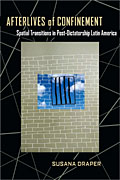
Afterlives of ConfinementA new book by Susana Draper, assistant professor of comparative literature at Princeton University, uses the phenomenon of the “opening” of prisons to begin a dialogue on conceptualizations of democracy and freedom in post-dictatorship Latin America. Focusing on the Southern Cone nations of Uruguay, Chile, and Argentina, she examines key works in architecture, film and literature to reveal the veiled continuity of dictatorial power structures in ensuing consumer cultures.

For carceral geographers, her book has particular appeal for its discussion of Punta Carretas prison, in Montevideo, opened in 1910 as the exemplar of model prison architecture in Uruguay, and copied from the 1898 Fresnes prison in France. Designed in the ‘telephone pole’ style, its aim was to rehabilitate individuals through humanitarian punishment, and its opening, which coincided with the abolition of the death penalty, was characteristic of the Uruguayan state’s modernization plans.

However, by the 1930s Punta Carretas was holding political prisoners, becoming by the 1970s Uruguay’s most important centre of confinement for politicals, until a mass escape in 1971 saw the prison nearly emptied, and the remaining prisoners moved to the new military Libertad Penitentiary. Post-1970s, the prison held mainstream prisoners, and eventually it was slated for closure, a decision initially triggered by rising local property values, but then delayed by the recognition that Punta Carretas was a national site of cultural heritage, which should be preserved. However, the cost of the preservation of the building proved too high for the then post-dictatorship state, and a decision was taken to preserve the building, but to put it to commercial use.

The prison was converted into a shopping mall in 1994, as part of a larger process which Draper describes as a means to ‘envision the country of the future – that is, the country of consumer services’ (Draper 2012, 23). In converting the prison,  a conscious effort was made to selectively demolish and preserve certain features, in an effort to “preserve the spirit of the prison, but in a way in which this ‘preservation’ would not be an obstacle to developing its new function” (architect Estela Porada, cited in Draper 2012, 48). Draper draws particular attention to this notion of the ‘spirit’ of the prison, suggesting that the spirit is connected to ‘leaving behind the prison in architectural form without bringing forth the painful, past spectres of this site’ (ibid 49).

Discussing the actual space of the prison-mall, Draper describes the preserved relics of the prison – the facade, the gateway through which prisoners were previously led to their cells, the walkways on former prison landings, and the former cells which now contain shops, food courts and entertainment complexes. She particularly focuses on the tensions in the building between the inside and outside of the mall, specific relics of the prison which appear disconnected from the mall itself, and the effect of the disguised and fetishised remnants of the prison within the colourful mall.

For carceral geographers, Draper’s book, which also analyses the literary afterlives of Punta Carretas (writings on the prison itself and its transformation) offers an intriguing reading of this site, weaving together ideas of spirits and spectres, idioms and residues, evocation and translation, and the relationship between the unique and the universal.  Read alongside other work on the conversion of prison sites, emerging from geography and from tourism and heritage studies, this work offers a highly nuanced and contextualised reading of Punta Carretas and its transformation, embedded within a wider set of transformations of the Uruguayan state.

Draper, S (2012) Afterlives of Confinement: Spatial Transitions in Postdictatorship Latin America, University of Pittsburgh Press, Pittsburgh, USA.

New papers in carceral geography: space, privacy, affect and the carceral habitus

Over the past few months a number of new papers have emerged which may be of interest to carceral geographers. Written by both geographers and criminologists, they address a range of issues but share a common concern with the importance and significance of carceral space.

First, Thomas Ugelvik’s book chapter “The Bellman and the Prison Officer: Customer Care in Imperfect Panopticons” is a fascinating piece which contrasts the ‘gaze’ of the prison officer and the hotel bellman, as they observe prisoners and hotel guests in ways which balance professional customer care with concerns for security and control. He calls this a ‘dual optic’, ‘partly focused on the needs of others, partly on the potential problems these others represent’ (Ugelvik 2013, 192). Drawing on the penal context of Norway, he also draws attention to the issue of privacy as experienced in carceral spaces and in hotels, in that in neither context can prisoners nor hotel guests completely close off ‘their’ spaces from the officer or the bellman – although he points out the lack of fit between the ‘panoptical’ prison model and Norwegian prison cells, where prisoners are afforded a legal right to privacy.

Next, taking up the notion of prisoner privacy, a paper in press emerges from research into women’s imprisonment in Russia, focusing squarely on the elusiveness of privacy in carceral space. By deploying a theoretical engagement with the concepts of ‘public’ and ‘private’, the paper exlores the experience of surveilled carceral space, specifically the ways in which imprisoned women negotiate and engage with apparently ‘public’ spaces to construct the ‘private’ by deploying a range of personal tactics such as retreat into the self, or intentional violation of prison rules, to experience the ‘punishment’ of solitary confinement. “Privacy in Penal Space: Women’s Imprisonment in Russia” by Dominique Moran, Judith Pallot and Laura Piacentini, is available in early view at Geoforum.

Jennifer Turner’s recent review paper “Disciplinary Engagements with Prisons, Prisoners and the Penal System” calls for ‘renewed interest in the relational, fluid, contradictory and nuanced spaces of imprisonment’ , particularly in regard to ‘the affective nature of imprisonment’ (Turner 2013, 41). She points out the value of perspectives from cultural geography in drawing attention to these nuanced spaces, and in drawing out their significance ‘to open up the political at a more ‘personal’ level’ (ibid 35).

Turner’s call for attention to be paid to the affective potential of penal space is the focus of Dominique Moran’s new paper “Carceral geography and the spatialities of prison visiting: visitation, recidivism and hyperincarceration“, which draws together recent work in human geography on emotion and affect, as a means of understanding the personal experience of carceral space – specifically the experience of prison visiting rooms as liminal transformative spaces for prisoners and visitors alike. In so doing, it argues that in advancing understandings of the affective dimension of human experience in carceral space, carceral geography could not only exemplify a concept, but also participate in efforts to make positive social and political change.

Finally, engaging with carceral space in a very different way, Judah Schept’s forthcoming paper “‘A lockdown facility…with the feel of a small, private college’: Liberal politics, jail expansion, and the carceral habitus‘ discusses ways in which communities participate in the production of the carceral state in the United States, and specifically, the ways in which mass incarceration imbues even oppositional politics, as communities reformulate and adapt the material manifestations of mass incarceration to fit specific local contexts. Schept contends that ‘mass incarceration is both more forceful and more subject to diverse and context-specific formulations than has previously been argued’, and he argues that ‘the corporal and discursive inscription of carcerality into individual and community bodies’ suggests the presence of what he terms a ‘carceral habitus’. This term,  in the context of his paper, offers a way to understand the ways in which mass incarceration pervades even those people and communities ‘which purport to reject it’ suggests that mass incarceration is not just ‘out there’ in media representations, political rhetoric and everyday penal functionings, but also ‘in here’ in the ‘everyday negotiations and productions of the social world’ .

Considering habitus as as an ‘always sociospatially contextualized, nature of practice’ (Holt 2008, 228) enables the notion of carceral habitus as a shared consciousness to be mapped onto tangible spaces, potentially opening a space for carceral geography to consider the ‘carceral’  as emplaced and affective, as a social construction ‘relevant both within and outside physical spaces of incarceration’ (Moran 2013, 176) and to inform future research into the relationship between the carceral and a punitive state.

“Sites of Confinement” event at Liverpool John Moores University – March 2013

Many thanks to Monish Bhatia for bringing this upcoming event to my attention – sounds like a great opportunity to discuss some very current ideas.

Sites of Confinement is taking place on 22nd March 2013, at Liverpool John Moores University, 68 Hope Street, Liverpool, UK.

This day conference offers an opportunity to critically discuss increases in the uses of confinement and incarceration in relation to neoliberalism, globally as well as in the UK.

With activists, researchers and academics working in prisons, detention centres and camps, it will consider the roles of social structures, power, and lived experience in relation to confinement. Importantly, this conference will consider increases in incarceration as a method of social control in areas of extreme deprivation, as well as with marginalised groups.

The full details, including speakers and paper titles, and joining instructions, are available here

Carceral Geography at the AAG 2013

Thanks to a wonderful response to the Call for Papers, Shaul Cohen and I have been able to organise a number of sessions on Carceral Geography for the AAG 2013 in Los Angeles this April.

 The so-called ‘punitive turn’ has brought new ways of thinking about geography and the state, and has highlighted spaces of incarceration as a new terrain for exploration by geographers. Geographical engagements with incarceration have put these spaces, and experiences within them, firmly on the disciplinary map. Human geography, and specifically the evolving sub-discipline of carceral geography, have much to offer to the study of incarceration, and taking the carceral as a locus of research offers useful opportunities both to invigorate ongoing developments within human geography, and to contribute to positive social change.

Carceral geography is a new but a fast-moving and fast-developing sub-discipline, and is proving an increasingly vibrant field. These sessions provide a space for discussion of recent scholarship, situating it in the context both of contemporary human geography and of the interdisciplinary literature from criminology and prison sociology upon which it draws, and to also explore a range of potential avenues of future research which are open to transdisciplinarity, which are both informed by and extend theoretical developments in geography, but which also, and critically, interface with contemporary debates over hyperincarceration and the punitive state.

There will be four sessions in all, sponsored by the Cultural Geography Specialty Group of the AAG – three paper sessions and a roundtable session for a forthcoming book: Details are:

Carceral Geography: Debates, Developments and Directions I

Carceral Geography: Debates, Developments and Directions II

Carceral Geography: Debates, Developments and Directions III ‘Carceral Spaces: Mobility and Agency in Imprisonment and Migrant Detention’

This session coalesces around a new edited book which defines a new field in geographical research, drawing together the work of a new community of scholars and a growing body of work in carceral geography – the geographical engagement with the practices of imprisonment and migrant detention. Increasingly, these spheres overlap. Just as ‘mainstream’ prison populations have expanded over the past twenty-five years, there has also been a veritable explosion in the use of detention for irregular migrants. Migrants are increasingly scrutinized as criminals, so much so that scholars and activists now refer to this nexus as ‘crimmigration’. This book brings together scholars whose work engages practices of imprisonment and/or migrant detention with the goal of opening up a forum within geography and related interdisciplinary fields of study (critical prison studies, criminology, etc.) for conversation / dialogue across these ever more intertwined spheres.

Organisers and Panelists: Dominique Moran, Nick Gill, Deirdre Conlon, Lauren Martin, Kelsey Nowakowski, Mason McWatters, Julie de Dardel

Carceral Geography: Debates, Developments and Directions IV

Call for Papers: RGS-IBG 2013 “exploring social reintegration and rehabilitation into the ‘everyday’”

Agatha Herman and Kim Ward are organising a fascinating session at the RGS-IBG conference later this year, and have issued the following Call for Papers. The session highlights reintegration and rehabilitation, and carceral geographers may be interested in presenting papers which could focus on carceral spaces and the challenges of release from incarceration.

RGS-IBG Annual International Conference, London, 28-30 August 2013

Creativity and transition: exploring social reintegration and rehabilitation into the ‘everyday’

Organizers: Agatha Herman (University of Plymouth) and Kim Ward (University of Cardiff).

This session is sponsored by the Geographies of Justice Research Group and the Social and Cultural Geography Research Group.

Adjusting to ‘civilian’ life can be a challenge whether, within the UK context, you’re one of the 170,000 offenders released each year to the probation service or one of the 20,000 currently leaving the British armed forces annually.  Employment, relationships, finances, mental health, housing… all can become issues for those returning to ‘civilian’ spaces.  Considering the numbers and needs of those transitioning out of military or carceral institutions, particularly against the contemporary backdrop of austerity, highlights the necessity of effective and sustainable reintegration and rehabilitation for economic, social, political and moral reasons.  However, individuals worldwide and outside of these particular spaces can also struggle with exclusion from the ‘everyday’.

This session explores in particular how creative practices can support the reintegration and rehabilitation of those who, in the broadest sense, have become separated from everyday social spaces, practices and communities.  In particular we are looking to explore innovative and resourceful methods of engaging with those in transition, as well as the creative methods that can be used to connect with, and support, reintegration and rehabilitation experiences.  Contributions are welcome from a range of areas across and beyond geography, including engagements from outside academia.

Potential questions/topics for discussion include:

  • Can creativity be inclusive?
  • Theatre, music and arts-based projects
  • Social responsibility towards veterans?
  • Social exclusion, substance abuse and homelessness
  • Mental health
  • Carceral spaces
  • Creative methodologies to engage with social exclusion
  • Challenges of working in disciplinary environments
  • Performing rehabilitation

Please send abstracts of no more than 250 words to Agatha Herman (agatha.herman@plymouth.ac.uk) by Tuesday 5th February 2013.

Funded PhD studentship: “The Carceral Archipelago: Transnational Circulations in Global Perspective, 1415-1960”

The School of Historical Studies at the University of Leicester is offering a PhD studentship package for research on the Russian island of Sakhalin as part of a €1.5 million European Research Council grant for the project ‘The Carceral Archipelago: Transnational Circulations in Global Perspective, 1415-1960’.

This project will take a case study and comparative approach to the history of imperial expansion, unfree labour, confinement, and their legacies through a focus on the history of penal colonies all over the world.

Full details can be found at: http://www2.le.ac.uk/study/research/funding/carceral-archipelago . Please note that the closing date for applications is 8 March 2013.